Sustain · 22 / 24

Organizational Resilience

Making trust hold under shock

Definition

Organizational Resilience is the discipline of designing an organization so it can absorb disruption, learn from strain, and adapt without losing trust, identity, or coherence, rather than relying on the exceptional effort of a few individuals to hold it together.

The trade-off between stability that protects and stability that becomes brittle when conditions change.

The tension it resolves

Recovery is often mistaken for resilience, yet an organization can recover through exhaustion, emergency authority, or deferred maintenance and still be no stronger than before. The harder question is whether pressure reveals design flaws or simply gets absorbed by people who quietly compensate for them.
What the competency demands

This requires knowing in advance which promises are nonnegotiable, which interfaces are likely to fail under load, and where slack exists by design rather than by accident, so that when pressure rises it produces information rather than just strain.

Across Levels of Work

  1. Level 1 — Quality Resilience looks like surfacing small variances honestly instead of letting them become normalized under pressure.
  2. Level 2 — Service Resilience means absorbing exceptions and disruptions without pushing hidden costs onto customers or colleagues.
  3. Level 3 — Practice Improvement strengthens routines against recurring fragility; innovation tests new approaches when the current system can no longer carry demand.
  4. Level 4 — Strategic Development Leaders build redundancy, governance, and decision rights so adaptation does not depend on exceptional individuals.
  5. Level 5 — Strategic Intent Direction chooses which future the organization prepares for; viability tests whether the transition can be absorbed without breaking trust.

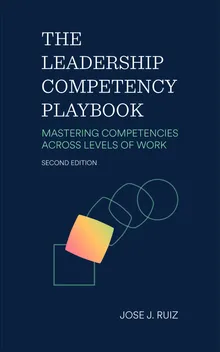
This competency has its own chapter in the second edition.

The Leadership Competency Playbook — Second Edition

Second Edition — available now

Read the second edition

Twenty-four competencies, read through the DOES cycle and the Levels of Work. The full architecture, chapter by chapter.

Available in paperback and Kindle.