Organize · 08 / 24

Talent Alignment

Placing people against the work, not the title

Definition

Talent Alignment is the discipline of reading what a role's judgment, time horizon, and consequence actually require, then placing and authorizing people whose ability, capability, and capacity genuinely match that demand.

It resolves the mismatch between the level of work a role truly demands and who has actually been placed to carry it.

The tension it resolves

Organizations routinely confuse strong present-day performance with readiness for a larger horizon, promoting people into work that requires different judgment than the work they already do well. Left unresolved, this mismatch is disguised by adding meetings, controls, or headcount instead of correcting placement.
What the competency demands

The practice starts with naming what the role genuinely asks for before considering who might fill it, then checking whether the surrounding system gives that person the authority, training, and protection the placement requires.

Across Levels of Work

  1. Level 1 — Quality Placement means matching people to stable, learnable methods with fast feedback, so skill can build without humiliation.
  2. Level 2 — Service The work shifts toward coordinating flow, and placement must balance someone's ability to execute with their ability to adapt.
  3. Level 3 — Practice This is where strong operators are often mistakenly promoted into work that requires diagnosing patterns rather than moving faster.
  4. Level 4 — Strategic Development Misplacement becomes systemic risk, since roles here must integrate across functions and reconcile competing constraints.
  5. Level 5 — Strategic Intent People are placed into horizon-bearing obligations, and imbalance between visionary and validating roles becomes an institutional risk.

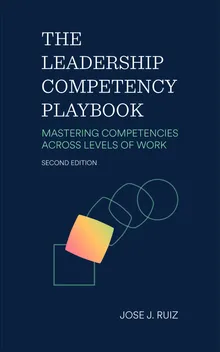
This competency has its own chapter in the second edition.

The Leadership Competency Playbook — Second Edition

Second Edition — available now

Read the second edition

Twenty-four competencies, read through the DOES cycle and the Levels of Work. The full architecture, chapter by chapter.

Available in paperback and Kindle.