Sustain · 24 / 24

Sustainability Thinking

Making legitimacy durable

Definition

Sustainability Thinking is the discipline of reading economic, social, environmental, and ethical consequence together rather than one at a time, so an organization's success does not quietly deplete the trust, people, or conditions that make its continued existence legitimate.

The trade-off between present commercial performance and the long-term legitimacy that permission to keep operating depends on.

The tension it resolves

Organizations are often built to optimize inside silos and justify consequences across them later, which lets costs get pushed into another stakeholder, another system, or another point in time until they return as a crisis that appears to come from nowhere. It never truly comes from nowhere.
What the competency demands

In practice, this requires asking what value is being created and for whom, what costs are being quietly displaced, and what would still make a decision defensible several years from now rather than only profitable next quarter. It has to change what gets funded, not only what gets said.

Across Levels of Work

  1. Level 1 — Quality The work is staying honest and careful so today's shortcut does not quietly become tomorrow's burden for someone else.
  2. Level 2 — Service The work is interpreting what responsible service means when speed, cost, and consequence no longer align easily.
  3. Level 3 — Practice Improvement redesigns methods that are leaking hidden cost; innovation asks whether the underlying model itself deserves to continue.
  4. Level 4 — Strategic Development Leaders redesign incentives, sourcing, and governance so long-term responsibility becomes more likely by design, not sentiment.
  5. Level 5 — Strategic Intent Direction sets what growth the organization will pursue or refuse; viability tests whether that posture can be funded and sustained.

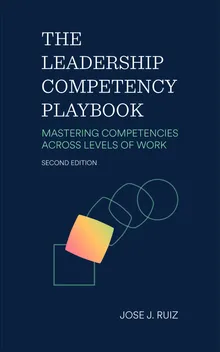
This competency has its own chapter in the second edition.

The Leadership Competency Playbook — Second Edition

Second Edition — available now

Read the second edition

Twenty-four competencies, read through the DOES cycle and the Levels of Work. The full architecture, chapter by chapter.

Available in paperback and Kindle.