Design · 01 / 24

Strategic Visioning

Giving the future operational shape

Definition

Strategic Visioning is the discipline of shaping the future with enough specificity that present decisions gain direction, sequence, and honest constraint, rather than simply gaining enthusiasm.

It resolves the gap between an exciting future and a future specific enough to guide real trade-offs.

The tension it resolves

Leaders often mistake broad ambition for direction, keeping many futures alive at once to avoid disappointing any audience. That habit protects comfort in the short term but forces managers below to quietly reconcile promises that were never made to fit together.
What the competency demands

The competency demands disciplined reduction rather than expansive language: naming what will not be pursued, what must be learned early, and what the future actually requires people to give up. It must hold up against the test of whether it helps someone several levels down make a harder trade-off with more confidence.

Across Levels of Work

  1. Level 1 — Quality The future in view is immediate and bounded: understanding what a task is meant to protect, not just how to complete it.
  2. Level 2 — Service The person anticipates how a promise must hold across a cycle of variation, shaping response before failure appears.
  3. Level 3 — Practice Vision refines an existing method under Continuous Improvement, or gives shape to an unproven alternative under Innovation.
  4. Level 4 — Strategic Development Vision becomes architecture: deciding what capabilities, sequencing, and investments a future actually requires to be load-bearing.
  5. Level 5 — Strategic Intent Direction sets the arena and trajectory the organization will pursue; Viability tests whether that trajectory can be governed and sustained.

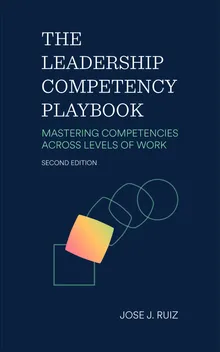
This competency has its own chapter in the second edition.

The Leadership Competency Playbook — Second Edition

Second Edition — available now

Read the second edition

Twenty-four competencies, read through the DOES cycle and the Levels of Work. The full architecture, chapter by chapter.

Available in paperback and Kindle.