Execute · 17 / 24

Performance Management

Tracking progress, enabling performance

Definition

Performance Management is the discipline of making work visible enough, soon enough, that commitments, standards, and behavior can be judged and corrected before a miss hardens into consequence.

This competency resolves the trade-off between too little visibility, which lets drift hide, and too much pressure, which turns measurement into fear.

The tension it resolves

Many organizations treat this competency as annual reviews and ratings that arrive too late to change anything, or as blunt pressure that produces gaming and short-horizon behavior. The real difficulty is building measures that reveal truth without reducing people to a score.
What the competency demands

In practice, this competency requires calibrating what kind of evidence counts at each level of work and resisting the temptation to drag short-horizon metrics upward as proof of long-horizon progress. It also requires that measurement stay tied to what can actually be improved, not merely to what is easy to count.

Across Levels of Work

  1. Level 1 — Quality Evidence is concrete and immediate: whether standards were met, with timely correction when variance appears.
  2. Level 2 — Service Measurement must reveal whether an experience held together across touchpoints, not only whether one task was completed.
  3. Level 3 — Practice Measures shift from tracking who hit the number to diagnosing what a recurring pattern reveals about the method itself.
  4. Level 4 — Strategic Development Measures must expose interdependence across functions, since locally rational targets can still produce systemic friction.
  5. Level 5 — Strategic Intent The evidence must show whether the organization is building what the future requires, and whether that future can be sustained.

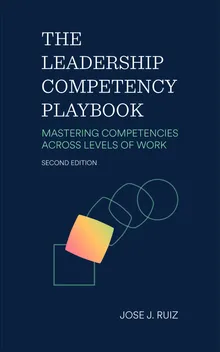
This competency has its own chapter in the second edition.

The Leadership Competency Playbook — Second Edition

Second Edition — available now

Read the second edition

Twenty-four competencies, read through the DOES cycle and the Levels of Work. The full architecture, chapter by chapter.

Available in paperback and Kindle.