Design · 04 / 24

Analytical Decision-Making

Deciding what reality can support

Definition

Analytical Decision-Making is the discipline of using evidence to sharpen a choice and expose its trade-offs, rather than using analysis to delay the moment when someone must commit and carry the consequence.

It resolves the tension between enough evidence to avoid fantasy and enough judgment to move before certainty arrives.

The tension it resolves

Organizations often mistake volume of analysis for rigor, producing more data and more scenarios while the underlying decision stays untouched. The harder failure is allowing evidence to challenge sunk cost, identity, or a favored narrative rather than simply confirming it.
What the competency demands

The competency demands letting destabilizing evidence actually change direction, architecture, or commitment rather than treating analysis as ceremony. It requires evidence that can travel across functions instead of being reduced to local preference.

Across Levels of Work

  1. Level 1 — Quality The work is reading present variance accurately enough to preserve reliability rather than explaining it away.
  2. Level 2 — Service Evidence becomes social, moving through coordination and conversation to guide sequencing and response.
  3. Level 3 — Practice Continuous Improvement converts recurring evidence into better method; Innovation asks whether the old frame is still defensible.
  4. Level 4 — Strategic Development Analysis becomes architectural, reshaping investment priorities and cross-functional design rather than only local practice.
  5. Level 5 — Strategic Intent Direction uses evidence to choose trajectory under uncertainty; Viability validates whether that trajectory preserves legitimacy and coherence.

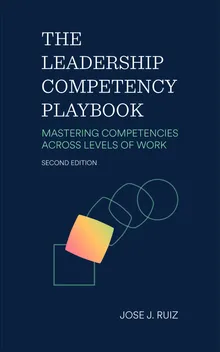
This competency has its own chapter in the second edition.

The Leadership Competency Playbook — Second Edition

Second Edition — available now

Read the second edition

Twenty-four competencies, read through the DOES cycle and the Levels of Work. The full architecture, chapter by chapter.

Available in paperback and Kindle.